Last updated: February 10, 2026. Information verified through web research.
Situations in favelas can change rapidly. Always use a licensed local guide and check current safety conditions before visiting.
The Controversy
Favela tours in Rio have been criticized since the 1990s — and rightfully so. Early "slum safaris" were essentially jeep tours driving through neighborhoods with guides pointing at "the exotic poor." It was tourism as spectacle.
But the industry has evolved. Today, there are genuinely community-led tours that put money directly into residents' hands, while still having tour operators that treat favelas as zoos.
Here's how to tell the difference.
What Changed
The shift happened because residents got fed up with outside companies profiting from their neighborhood, and started running their own tours. The key differences:
- Community-led tours: Local guides, money stays in the favela, small groups, walking (not driving), educational focus
- Old-school tours: Outside operators, minimal local employment, large groups in vans/jeeps, voyeuristic approach
Both exist. Both call themselves "ethical." Only one actually is.
Which Favelas to Visit
Rocinha — The Largest
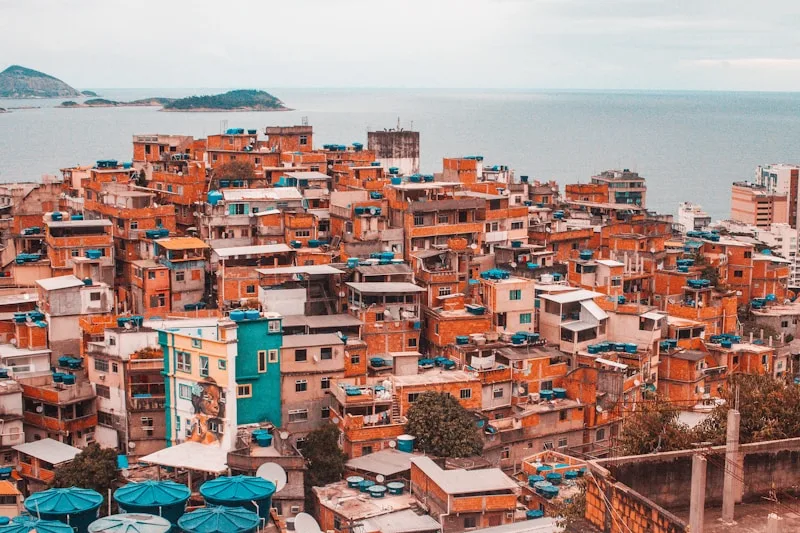
Rocinha is the biggest favela in South America (人口 ~70,000). It's also the most set up for tourism. Several community-run operators here:
- Local Rio Tours / Favela Walking Tour — Longest-running, 2 local guides per group, transparent about community contributions
- Favela United Tour — 20% of profits reinvested in community programs
- Na Favela Turismo — Registered local operator
Santa Marta — The Iconic
Smaller, more visually stunning (the colorful steps, the funicular), and with a strong community-run project. Favela Santa Marta Tour, founded by resident Thiago Firmino, has won responsible tourism awards.
Avoid
- Maré — Complex security situation, not set up for tourism
- Complexo do Alemão — Has improved but still inconsistent for visitors
What Ethical Tours Actually Do
Look for operators that:
- Have local guides who actually live in the favela
- Take walking tours (not van drives through)
- Limit group sizes (8-12 people max)
- Are transparent about how much money goes to the community
- Have won awards or have strong TripAdvisor reviews from actual visitors
- Visit during daytime (no "night tours" — that's a red flag)
What to Expect on a Tour
A good favela tour isn't about poverty tourism. It's about:
- Architecture and urban planning — How favelas actually work
- Community organizations — Schools, NGOs, local businesses
- Art and culture — Street murals, music studios, samba schools
- Daily life — Markets, bakeries, moto-taxis
- History — How favelas formed, government relations, drug trade era
You'll walk through narrow alleys, ride a moto-taxi to the viewpoint, meet locals running businesses, and learn about the complex realities of living in a favela.
The Hard Questions
There's no easy answer here. Consider:
Who benefits? — With community-led tours, your money goes to local guides, local restaurants, local projects. With outside operators, it often flows out of the favela entirely.
What's the frame? — A good tour is a cultural exchange. A bad tour is poverty tourism. The same location can be both depending on how it's presented.
Is tourism here a net positive? — Many residents depend on tourism income. But tourism can also gentrify neighborhoods, raise rents, and change community character.
Costs (2026)
| Tour Type | Cost (BRL) |
|---|---|
| Group walking tour (3 hours) | 130-220 |
| Private tour | 800-1,500 |
| Combined tour + football | 400-600 |
| Santa Marta tour | 150-200 |
Red Flags
- Operators advertising "slum safari" or "see how the poor live"
- Van/jeep tours that don't get out and walk
- Tours promising "authentic" poverty experiences
- No local guide (guide is from outside the favela)
- Night tours (seriously — avoid these)
- No safety information provided
The Bottom Line
Favela tours can be ethical — but you have to choose carefully. The difference between a community-led walking tour and a voyeuristic van ride is massive. Pick a local guide, ask about where the money goes, and approach it as cultural exchange, not spectacle.
Done right, you learn something real about Brazil. Done wrong, you're just another tourist gawking at poverty.